Key takeaways
- Send editable source files whenever you can; scans slow everything down.
- Finalise the content before translation starts; late changes cost time and money.
- Share context: audience, purpose, glossary and any previous translations.
- Tell us early if you need certification or a specific format.
The quality of a translation starts before a translator reads a single word. Clean files, clear instructions and a final version of the text can cut days from a project and remove a whole category of avoidable errors.
Here's how to prepare your documents so your translation comes back faster, more accurate and ready to use.
1. Choose the right file format
Translators work fastest with files they can edit directly. Editable files also keep your layout intact, so the translated document looks like the original.
| File type | How it works | Turnaround impact |
|---|---|---|
| Word, Excel, PowerPoint | Translated directly, formatting preserved | Fastest |
| InDesign / IDML | Translated and typeset by our DTP team | Fast, design-ready output |
| Editable PDF | Text extracted, then rebuilt | Moderate |
| Scanned PDF or photo | Text recreated manually or with OCR, then checked | Slowest |
Tip: If you only have a scan, send the highest-resolution version available. Blurry stamps, signatures and handwriting are the most common cause of clarification questions.
2. Lock the content first
It's tempting to start translation while the document is still in review. In practice, every change made after translation begins has to be tracked, re-translated and re-checked in every language. If changes are unavoidable, send them as tracked changes rather than a fresh file, so only the edited sections need updating.
3. Give the translator context
A sentence can be translated correctly and still be wrong for its purpose. A short brief makes a big difference:
- Audience: regulators, customers, employees or partners?
- Purpose: legal submission, internal reference, marketing or publication?
- Region: Gulf Arabic audience, Levant, North Africa, UK or US English?
- Terminology: a glossary, style guide or past translations you're happy with
- Do-not-translate items: brand names, product codes and references
Five minutes writing a brief can save five rounds of revisions.
4. Flag official requirements early
Documents for courts, ministries, embassies or universities often need certified or legal translation, and sometimes a specific layout, stamp or declaration. Let us know where the document is going and we'll make sure the format is accepted the first time.
Watch out: Names must match passports and official IDs exactly. Send a copy of the ID or the preferred spelling with your documents.
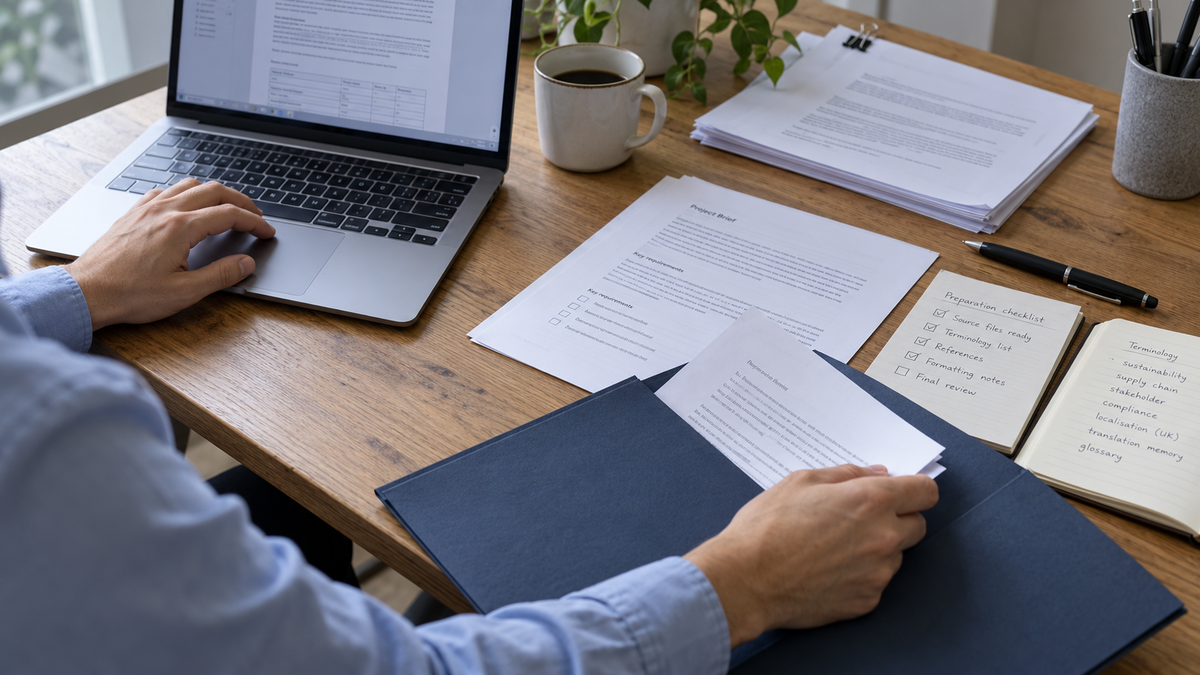
Your pre-translation checklist
- Final, approved version of the document
- Editable source file (or a high-quality scan)
- Target language and regional variant confirmed
- Purpose and audience noted
- Glossary, style guide or previous translations attached
- Certification or formatting requirements stated
- Deadline, including time for your internal review
Quick answers
Is my document kept confidential?
Yes. Files are handled securely and shared only with the linguists working on your project. We're happy to sign an NDA.
Can you translate charts and images with text?
Yes. Text inside images, charts and diagrams can be translated and rebuilt so the visuals match the rest of the document.
What if I find a change I need after delivery?
Send the updated section and we'll revise the translation and return a clean, final version.
Have documents ready to go?
Send them over and we'll confirm the price and turnaround, usually within the hour.
Get a QuoteDocument Translation Services